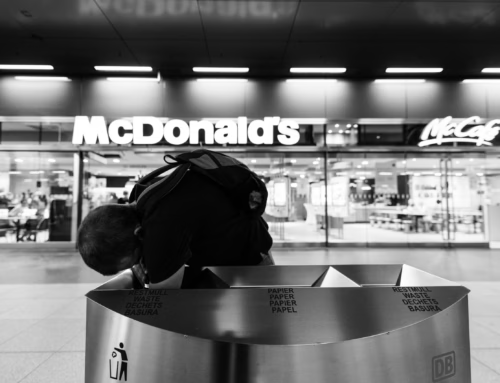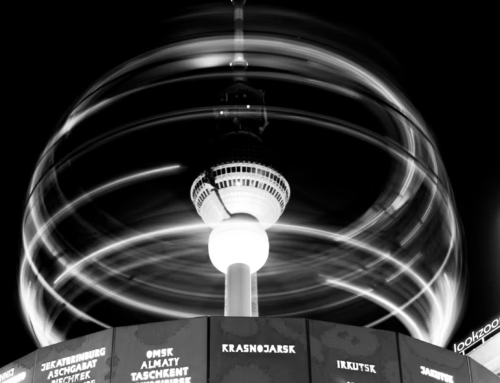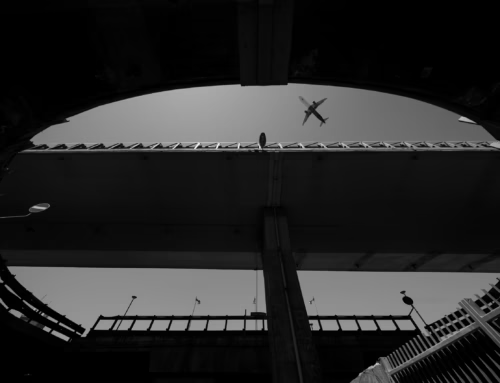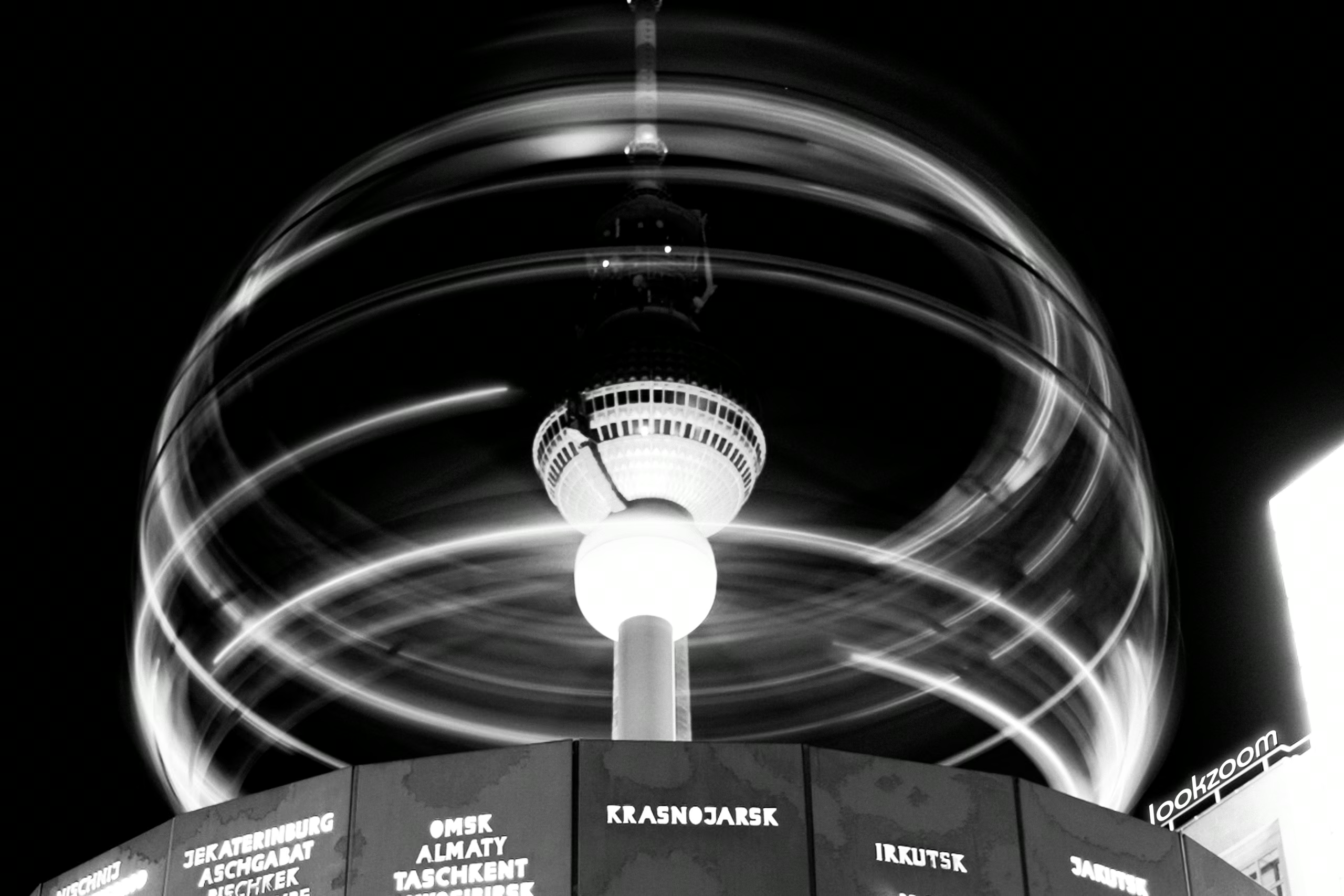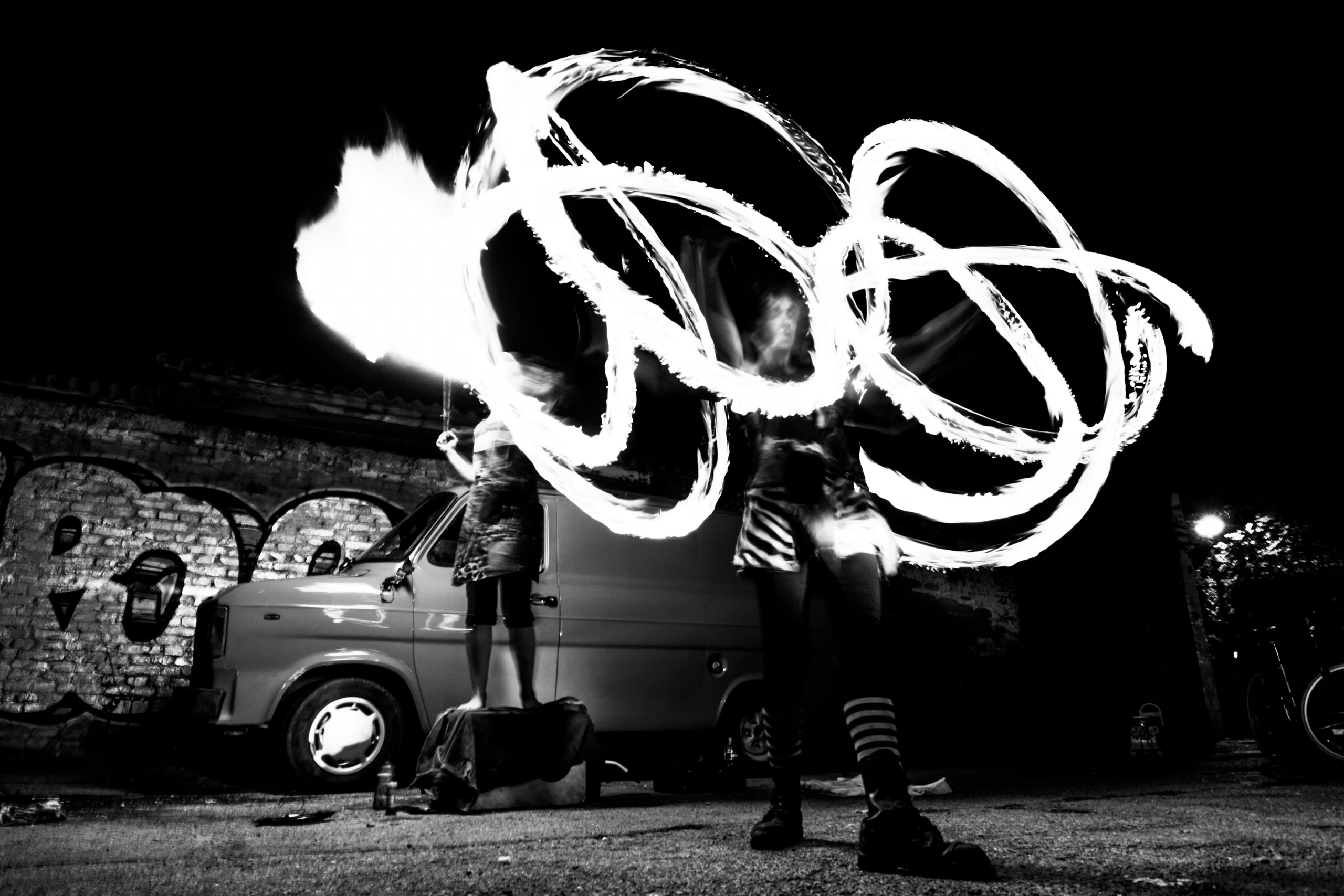


In the world of street photography, while sharp focus is often the holy grail, deliberately introducing motion blur can be a powerful artistic tool. It transforms static scenes into dynamic visual stories, conveying a sense of speed, chaos, elegance, or even the passage of time by showing movement rather than just a still moment. Motion blur occurs when either the subject or the camera moves during the exposure, resulting in a streak or blur of light.
Why Embrace Motion Blur?
Motion blur is a versatile technique that can elevate your street photographs by conveying speed and dynamism, such as a car streaking past, its blur clearly communicating velocity and adding urgency to the scene. It can highlight movement in a static scene, with a lone blurred figure against a perfectly still backdrop drawing the viewer’s eye directly to the action, creating a compelling focal point. It also adds abstraction and mood, transforming recognizable elements into ethereal streaks of color or light, creating abstract compositions and evoking a dreamlike or artistic atmosphere. Motion blur can emphasize the passage of time—long exposures of blurred crowds symbolize the constant flow of urban life, giving a sense of duration rather than just a single instant. Lastly, it can simplify complex scenes by blurring distracting elements, helping to push the viewer’s focus onto the sharp elements or the overall feeling of movement.
Techniques for Creative Motion Blur
There are several primary techniques to achieve compelling motion blur, each with a different effect:
- Panning: Sharp Subject, Blurred Background This technique involves moving your camera with a moving subject at the same speed as you press the shutter. The goal is to keep the subject relatively sharp while the background blurs into horizontal streaks, ideal for fast-moving subjects like cyclists, cars, or runners. For settings, use a shutter speed between 1/30s and 1/60s for moderate subjects, or slower for faster movement. Use AF-C (Continuous Autofocus) to track your subject. The key is to practice smoothly swinging your body and camera, following through even after the shot.
- Slow Shutter Speed: Blurred Subject, Sharp Background Here, you keep your camera relatively still while a subject moves through your frame during a long exposure. The background remains sharp, while the moving subject becomes a blur. This is perfect for highlighting the constant flow of people against a static urban backdrop in bustling city squares or train stations. Your primary control will be shutter speed, starting from 1/8s to 1/2s for subtle blur, or 1 second or longer for dramatic crowd blurring. You’ll likely need to close down your aperture (e.g., f/11-f/22) and/or use low ISO to avoid overexposure. In bright conditions, a Neutral Density (ND) filter might be necessary. A tripod is recommended for very long exposures, though bracing yourself against a wall can help for shorter ones. Use AF-S (Single Autofocus) on a static background element.
- Zoom Burst: Dynamic Streaks from the Center This technique involves rapidly zooming in or out with a zoom lens while exposing the image. This creates radial streaks emanating from the center of the frame, giving a dynamic, almost explosive effect. It’s ideal for abstracting busy scenes or adding energy to static elements. Experiment with shutter speeds from 1/15s to 1/2s. To execute, set your lens to one end of its zoom range, and as you press the shutter, smoothly twist the zoom ring to the other end. Remember to pre-focus before you zoom.
General Tips for Using Motion Blur
Experimentation is key as there’s no single perfect setting; different subjects, speeds, and light will require varied shutter speeds. Be prepared to experiment and review your results. If your camera or lens has image stabilization, it helps reduce blur from your own movements, but remember the desired blur comes from the subject’s movement or your intentional camera movement. At night, look for light trails created by motion blur combined with streetlights and car lights for stunning, vibrant streaks in your urban landscapes. Always ask yourself if the motion blur enhances the story or emotion you’re trying to tell, rather than using it just for its own sake.
By deliberately embracing motion blur, you can add a captivating layer of creativity and dynamism to your street photography, allowing you to interpret and express the energy of urban life in fresh and exciting ways.
Considering you’re in Berlin, you could find interesting subjects for motion blur in the bustling Alexanderplatz, with its trams and pedestrians, or perhaps capture the speed of the U-Bahn or S-Bahn trains as they rush through stations. The famous Reichstag building or Brandenburg Gate areas also offer opportunities to show the flow of tourists and city life against static historical backdrops.